Rechercher...
Relaxing getaways: Corsican villages where you can stroll in complete tranquillity New
 Village typique corse ©adobe stock
Far from the bustling seaside resorts, Corsica reveals its unspoilt gems. Stroll through the centuries-old streets of Sartè (Sartène), admire the craftsmanship of the artisans of Balagne or let yourself be charmed by the Greek influences of Carghjese (Cargèse). Each Corsican village tells a unique story, combining living traditions and authentic heritage. These timeless places offer a peaceful interlude, perfect for recharging your batteries.
The Balagne Artisans' Route: treasures of craftsmanship
In Balagne, a region nicknamed the ‘Garden of Corsica’, the Strada di l'Artigiani connects more than forty artisan workshops. The circuit is organised around three complementary itineraries.
The coastal circuit connects Lozari to Galeria. On your way, visit the A Terrissage workshop located on L'Isula (L'Île-Rousse ). There you will discover the delicate art of stoneware ceramics. Near Calvi , Atraverre transforms glass into works of art and jewellery.
Discover another aspect of local craftsmanship by leaving the coast and heading for the hills. The route through the hilltop villages passes through towns such as Santa Reparata di Balagna. The biscuit factory Biscotti Joséphine makes traditional Corsican biscuits, such as Cucciole with white wine. Pigna is famous for its handmade music boxes from Scatt'a musica and its instruments made by Casa-Liutaiu .
In the hills between Olmi è Cappella (Olmi-Cappella) and Calinzana (Calenzana), the soap factory A Caldaghja uses local plants in its creations, including immortelle, rosemary, myrtle, lavender and rockrose. In Zilia, the Alzipratu estate produces organic wines that can be tasted directly on the property, as can Zilia biscuits .
Cargèse, Greek heritage in Corsica
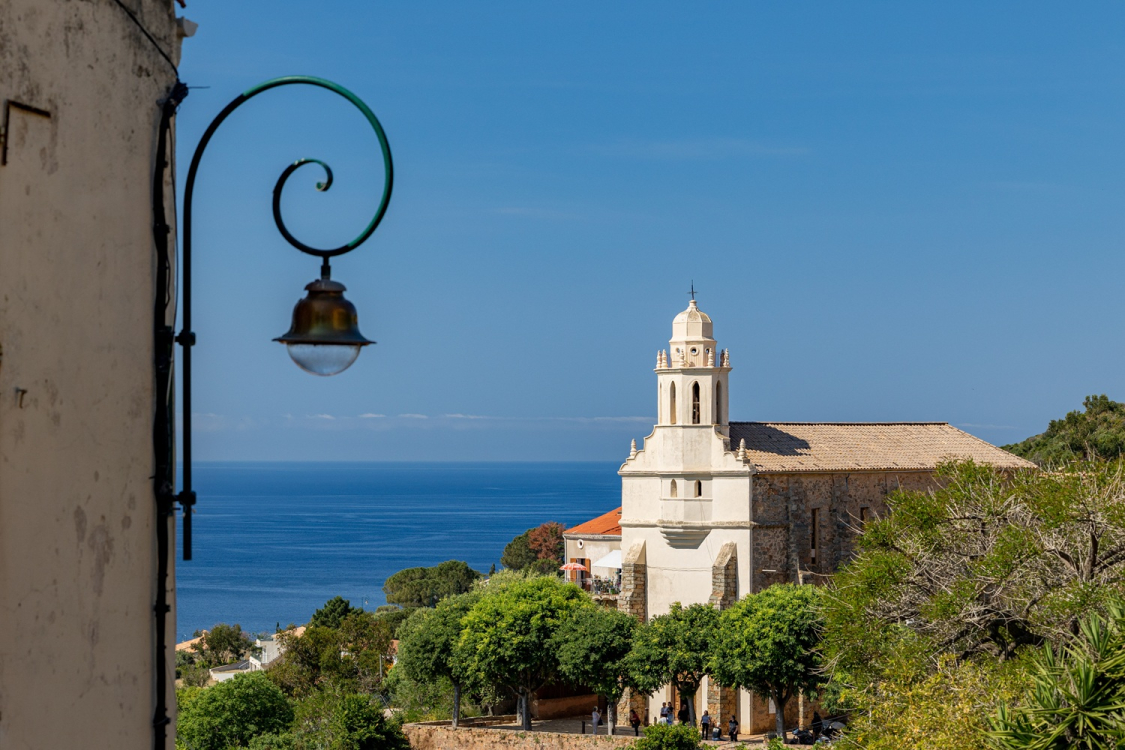 Orthodox church in Carghjese overlooking the Mediterranean Sea ©adobe stock
The white village of Carghjese (Cargèse ) was founded in 1776 by Greek families from the Peloponnese. Its unique character lies in its two churches facing each other. The Latin church in Baroque style and the Church of Saint Spyridon with its Greek icons are the perfect symbol of the meeting of cultures.
To the north of the village, Chiuni beach is guarded by a 15th-century Genoese tower. Peru beach is known for its fine sand and crystal-clear water.
Beyond the beaches, the coast is full of natural gems. Visit the village of Girolata, the Scandola Nature Reserve, the Gulf of Portu and the Calanques de Piana on boat trips from Carghjese.
Sartè (Sartène), ‘the most Corsican of Corsican towns’
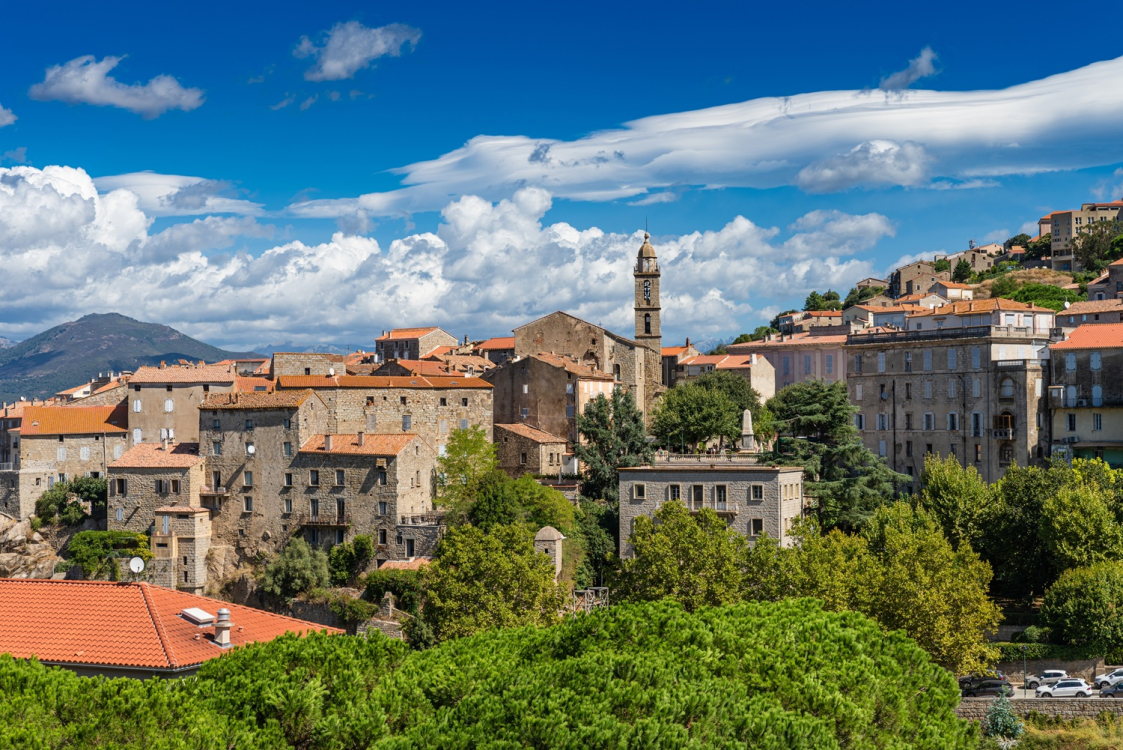 Panoramic view of the town of Sartène in Corsica ©ADOBE STOCK
Perched on its rocky spur known as ‘Pitraghju’, Sartè (Sartène) overlooks the Gulf of Valincu with its tall granite houses. The watchtower, a remnant of the 15th-century ramparts, and the Church of Santa Maria Assunta bear witness to its eventful history. The Place de la Libération, known as ‘Porta’, is the lively heart of the town with its cafés.
For a more in-depth 1.5-hour tour, the tourist office offers audio guides. The departmental museum of prehistory and the archaeological site of Cauria with its aligned menhirs complete the cultural interest of the place. Don't miss the famous ‘Catenacciu’ procession at Easter, an emblematic tradition of the town.
Alta Rocca, cradle of ancient Corsica
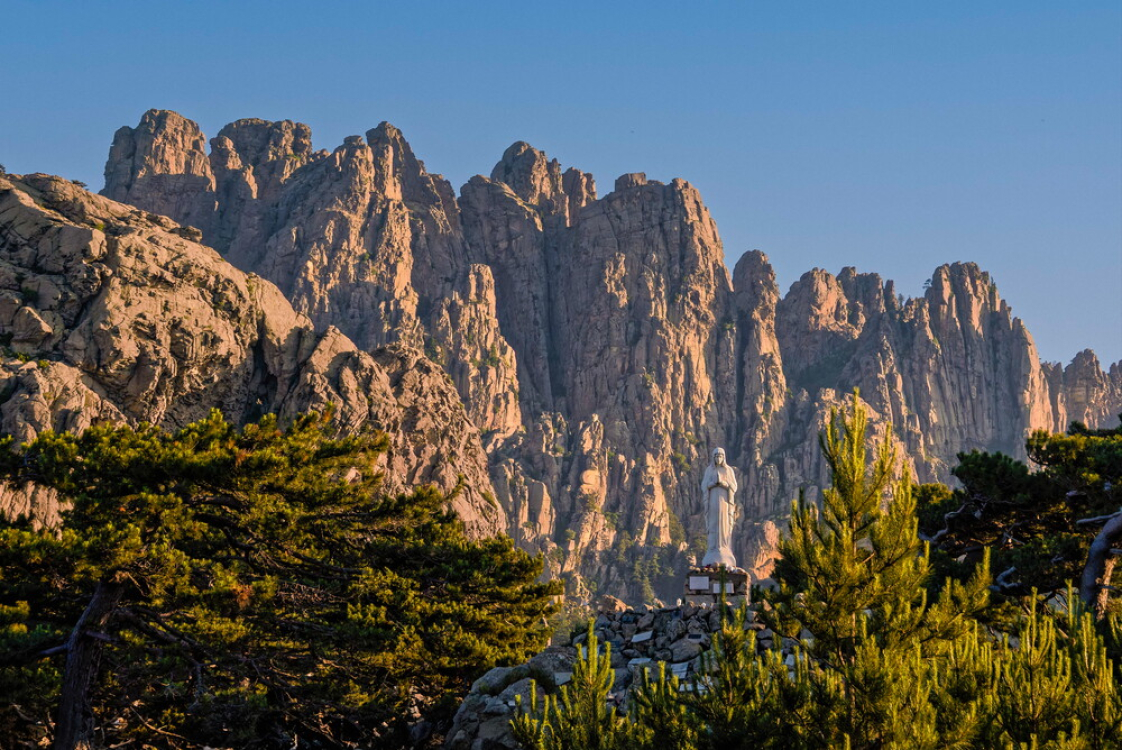 Alta Rocca ©ATC_CORSE
The Alta Rocca is bordered by three mountain ranges: Bavella, Ospedale and the Cuscionu plateau. The villages, with their granite houses, fountains and communal bread ovens, preserve traditional Corsican architecture.
The village of Livia (Levie), at an altitude of 600 metres, is the ideal starting point for exploring the area. Its museum displays the famous Lady of Bonifacio, a testimony to the island's first inhabitants.
Just 3 km from the town is the prehistoric site of Cucuruzzu . Its village, dating from 1800 BC, is classified as a historical monument. A 2.3 km marked trail leads you to Casteddu, a 10th-century medieval fortification, and then to the medieval chapel of Capula.
Heritage trails: following in the footsteps of our ancestors
The heritage trails immerse you in the rural heritage of the Isle of Beauty. Formerly used as communication routes between Corsican villages, today they offer culturally rich itineraries. The website Les Sentiers du Patrimoine lists all the available routes.
In Cutuli è Curtichjatu (Cuttoli-Corticchiato), the 2.166 km trail follows an old mule track. It connected Pumonti to Cismonte in the early Middle Ages. A symbol of Corsican resistance, the soldier Samperu Corsu took this route in 1567, followed by the writer Boswell two centuries later. The dry stone walls, steps and paving stones lining the path illustrate the skill of the builders of yesteryear.
At A Sarra di Scupamena (Serra-di-Scopamène), the route begins with a paved descent below the Vangonu district, in the heart of a traditional chestnut grove. Discover a chestnut dryer (u siccatoghju), then a water mill (u fragnu) fed by an aqueduct. Next, head to the Cadisusinu neighbourhood with its light-coloured granite buildings.
The I Strittoni trail (4 km) in A Munacia d'Auddè (Monacia-d'Aullène) reveals a landscape shaped by centuries of human activity. The oriu de Cubia, like the surrounding caves, has been occupied since prehistoric times. It is the oldest known settlement in Corsica.
The cork oaks are a reminder of the importance of bark harvesting in the local economy in the 19th century.
Tip: choose the right season for your visit
Spring (April-June) offers ideal conditions. Temperatures are mild, roads are less busy, nature is awakening and artisans have more time to share their expertise. In Sartè, the May carnival kicks off several days of festivities with Corsican songs and street entertainment. In autumn (September-October), the grape harvest is in full swing in the vineyards. This quiet period is ideal for a more peaceful exploration of the villages. In summer, it is best to visit in the morning to avoid the heat. The evenings are pleasant. Numerous festivals, concerts and night markets enliven the squares of Corsican villages.
The artisans' route in Balagne, the narrow streets of Sartè, the Greek heritage of Carghjese or the trails of Alta Rocca... Each of these unspoilt places reveals a Corsica that is conducive to contemplation and cultural escape. These relaxing getaways invite you to get back to basics while fully savouring the gentle island lifestyle.
Locate