Rechercher...
Discovering the profession of Corsican beekeeper with Tiphaine Pietri and Pierre Casalta New
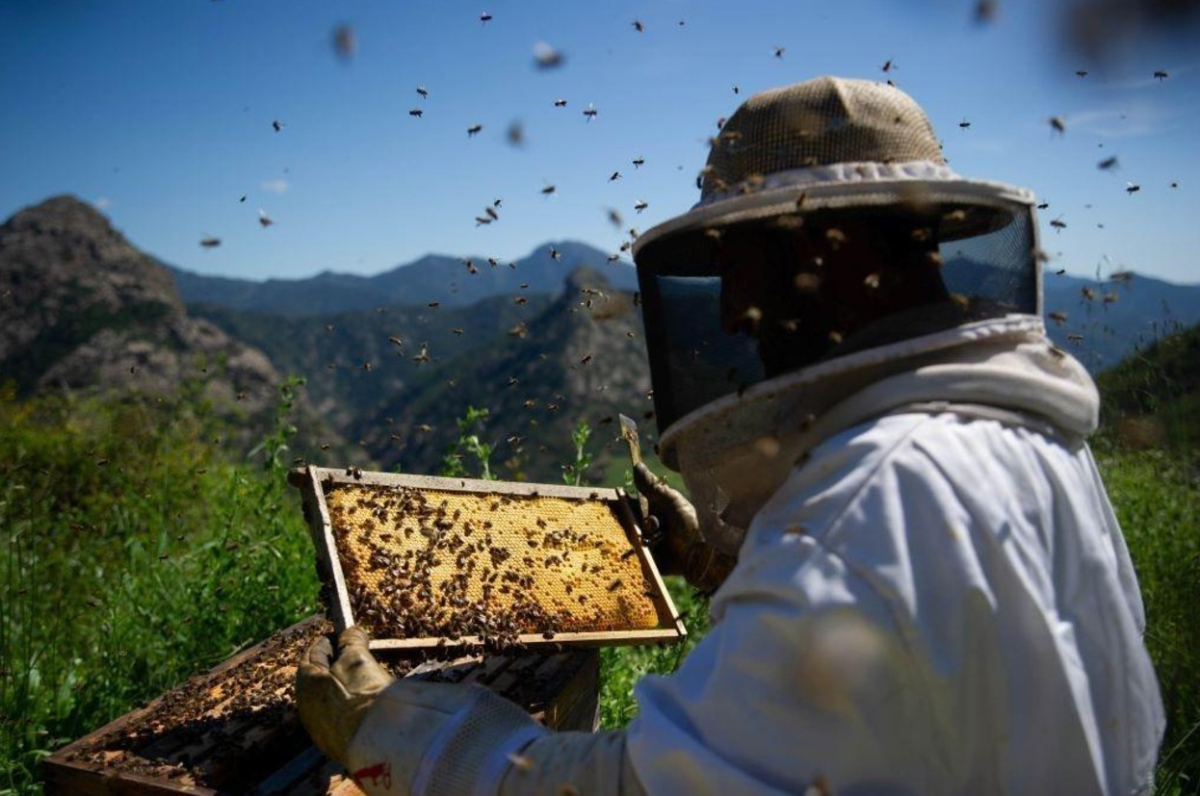 Apiculteur du Jardin des Abeilles ©ATC
Brother and sister beekeepers Tiphaine and Pierre work with bees in the wild Prunelli Valley. Their apiary, one of the largest on the island, buzzes with 20 million black Apis mellifera mellifera ecotype corsica bees (a species endemic to Corsica). These hard-working bees produce honey all year round. Le Jardin des Abeilles offers a behind-the-scenes look at the Corsican beekeeping profession.
The history of the Bee Garden
The first thing to know about beekeeping is that it is a labour of love. For the Casaltas, it is a family passion that took root in the village of Ocana , below the magnificent Lake Todda (Tolla).
In 2000, Denis and Nancy Casalta, parents of Tiphaine and Pierre, set up a few beehives and a workshop in their garden. As their passion grew, Denis Casalta decided in 2010 to devote himself entirely to beekeeping, and Tiphaine and Pierre have been friends with bees since childhood. Since then, the family honey farm has grown. In 2025, we will celebrate the 25th anniversary of Le Jardin des Abeilles, which grew out of the small apiary founded by Denis and Nancy. It now has a total of 400 hives that are moved around the valley as the flowers bloom. Today, Tiphaine and Pierre are in charge of the apiary and honey farm. Their parents continue to provide valuable support and travel the world to meet other beekeepers.
Le Jardin des Abeilles has a shop where Casalta honey is sold exclusively, as well as a bar-restaurant. There is also a new educational trail about Corsican bees and the beekeeping profession. The brother and sister complement each other perfectly. Bingo! Because beekeeping actually combines several professions, from queen rearing to honey marketing, including hive care, flower observation and honey extraction. Tiphaine is in charge of the shop, sales, events and the honey house. Pierre is responsible for breeding, managing the apiary, moving the hives and harvesting. Tiphaine and Pierre are versatile, able to assist each other with their tasks during busy periods. This is the case in summer when work in the apiary slows down and tourism is in full swing. Pierre joins his sister in the shop.
A profession related to the environment
Climate change has the greatest impact on bees and therefore beekeeping. A late frost or a lack of flowering can result in a zero harvest. Fortunately, honey has the advantage of not being perishable, so good harvests, when they occur, allow for reserves to be built up. Pierre is delighted to be a beekeeper in Corsica, in a wild valley rich in biodiversity: "Unlike on the mainland, we don't suffer from pollution caused by pesticides and fertilisers, or from predators such as the Asian hornet. But our greatest asset is the flowers. The flowers bloom in succession, allowing the bees to forage all year round and beekeepers to harvest up to six times a year."
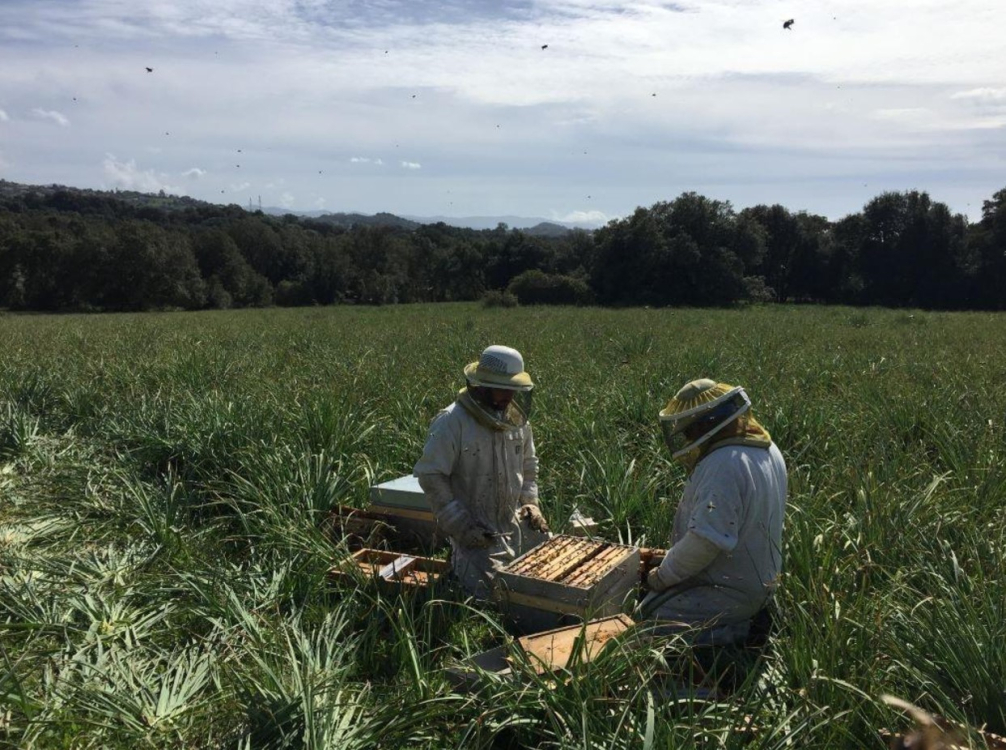 Honey harvest from the Bee Garden ©atc
A profession of humility and observation
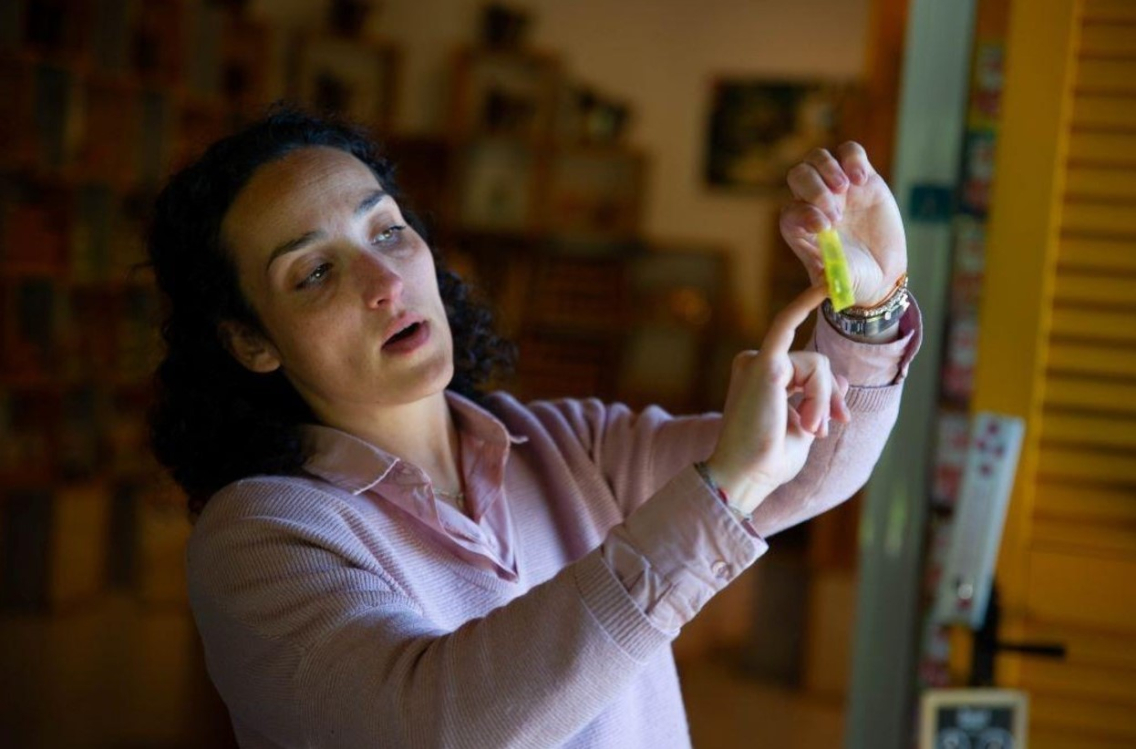 Tiphaine offers educational courses ©atc
Tiphaine and Pierre agree that the most important qualities for a beekeeper are calmness and humility. This profession requires putting yourself at the service of the bees. Tiphaine never tires of explaining the specifics of Corsican beekeeping to her visitors: "Our job is to observe nature and the landscape to detect when flowers are in bloom. And to observe the hives to see if the bees have everything they need. Our honey is a product of a preserved and distinctive natural environment. Apart from Vosges fir honey, Corsican honey is the only honey in France to have a PDO, and this applies to six varieties." Enough to make beekeepers on the mainland dream!
Committed to agritourism, Tiphaine and Pierre highlight their very special profession as Corsican beekeepers: "Our father already attached great importance to sharing. Coming to the Jardin des Abeilles is nothing like buying a jar of honey in a supermarket." When cousins Natalina, Pierre-Jean and Bianca-Maria take part in the tours with their parents, dressed in their white beekeeping suits, it's clear that the next generation is ready to take over.
Beekeeping lesson in the garden
For its 25th anniversary, the Jardin des Abeilles has created a new educational trail along the river, featuring 14 themed stations on honey and bees, beekeeping tools, extraction techniques, honey plants, and more. You will come across two glass beehives where you can watch the worker bees at work. Your tour ends in the shop with an informative tasting of the range of six Corsican PDO honeys, from the mildest to the strongest.
Le Jardin des Abeilles, Salvaduraghju, 20117 Ocana — 04 95 23 83 88 www.lejardindesabeilles.com
Bees and honey in Corsica
An endemic and protected species, the Corsican black bee is adapted to year-round flowering. There is no rest for this hard worker. Its mainland cousin is banned from being imported onto the island. The Corsican black bee is smaller and blacker than others, and its longer tongue allows it to feed deep into the heart of the calyx, effectively pollinating the maquis. Awarded an AOC/AOP Mele di Corsica designation in 1998, Corsican honey introduced the concept of ‘terroir honey’ to France. Its range includes six types of honey: Spring, Spring Maquis, Summer Maquis, Chestnut Grove, Maquis Honeydew and Autumn Maquis.
Good to know: An event not to be missed: ‘Mele in Festa’ in Murzu (Murzo), the Corsican honey fair celebrated every September.
Locate