Rechercher...
Duiken, kajakken op Corsica en verantwoorde verkenning van de onderwaterwereld
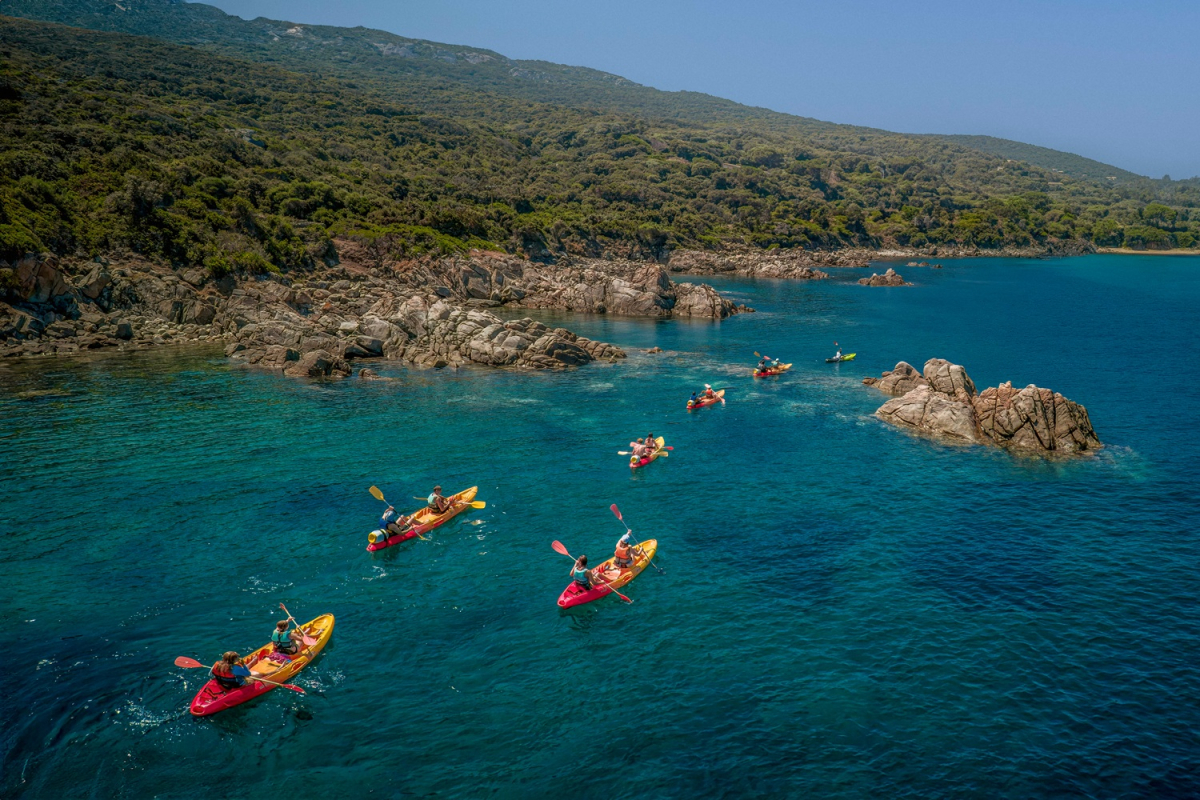 @Stéphane Compoint - Onlyfrance.fr
De beschermde mariene natuurparken van Corsica
Het mariene natuurpark van Cap Corse en Agriate strekt zich uit over 6.830 km². Het park, dat in 2016 is opgericht, omvat het natuurreservaat van de eilanden van Cap Corse en een deel van de economische zone. De grote parelmoerschelp (Pinna nobilis), de reuzenzeeslak (Patella ferruginea) en de diadeemzee-egel (Centrostephanus longispinus) behoren tot de beschermde soorten.
In het zuiden beslaat het natuurreservaat van de Bouches de Bonifacio 80.000 hectare tussen Corsica en Sardinië. Het gebied beschermt de Lavezzi-archipel , de kliffen van Bonifacio en diverse zeegrotten zoals de Sdragonato. Volgens de officiële inventaris vinden 37% van de opmerkelijke soorten van de Middellandse Zee er een toevluchtsoord.
Beide gebieden vallen binnen de grenzen van het Pelagos-reservaat. Dit internationale gebied van 87.500 km², opgericht door een tripartiete overeenkomst in 1999, beschermt acht soorten walvisachtigen die er regelmatig voorkomen, waaronder de tuimelaar, de blauwvin-dolfijn en de gewone vinvis.
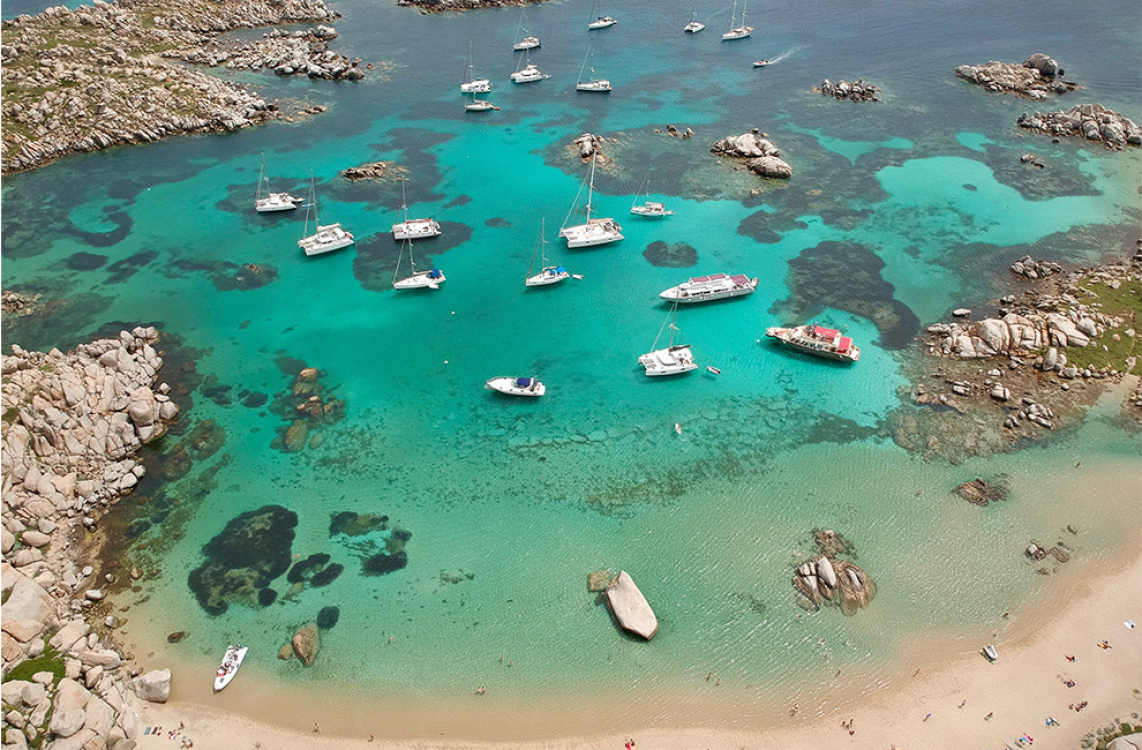 Lavezzi-archipel ©adobe stock
Duiken: een avontuur in de diepten van Corsica
Beginners ontdekken het wrak van de Pinella bij Portivechju (Porto-Vecchio). Het 42 meter lange cementschip ligt sinds zijn schipbreuk in 1965 op een diepte van 11 meter. Het eilandje Toro in het natuurreservaat Les Cerbicales biedt eveneens toegankelijke duiklocaties waar scholen barracuda’s zwemmen.
Duikers met niveau 2 genieten van het wrak van de B17 bij Calvi . De Amerikaanse bommenwerper ligt sinds februari 1944 op 27 meter diepte. Zijn structuur met een spanwijdte van 31 meter herbergt nu schorpioenvissen, murenen en diverse benthische soorten.
Ervaren duikers verkennen Mérouville bij de Lavezzi-eilanden. Deze plek, bekend om zijn kolonie tandbaarzen die tot 30 kg wegen, ligt op een diepte van 20 tot 32 meter. Les Cathédrales in de golf van Propriano biedt steile wanden van 15 tot 55 meter die bedekt zijn met sponzen en gorgonen.
Veiligheid en regelgeving bij het duiken
Omwille van de veiligheid moeten boten de Alpha-vlag voeren en moeten individuele duikers de rode vlag met witte diagonaal voeren. Schepen mogen binnen een straal van 100 meter niet sneller varen dan 5 knopen. In bepaalde gebieden, zoals Scandola, zijn duiken met zuurstofflessen en onderwaterjacht volledig verboden. Raadpleeg voor elke duik de lokale voorschriften.
Aarzel niet om de duikgids voor Corsica te raadplegen
Kajakken en suppen: over het water glijden om alles beter te kunnen zien
Het Cap Corse herbergt baaien die alleen voor kajakkers toegankelijk zijn. Vanuit Saint-Florent kunnen liefhebbers langs de westkust van de Agriate varen over een kustlijn van 225 km. Het gebied herbergt vier onderwatercanyons (Centuri Nord, Centuri Sud, San Fiurenzu, Isula Rossa) en twee visreservaten die in 1983 bij ministerieel besluit zijn ingesteld.
In de Bouches de Bunifaziu (Bonifacio) kun je met de kajak de Lavezzi-archipel verkennen, ver weg van de toeristische drukte die jaarlijks 150.000 bezoekers trekt. De granieten eilandjes dienen als toevluchtsoord voor de grijze stormvogel, een beschermde broedvogel. De plek herbergt ook de mediterrane kuifaalscholver.
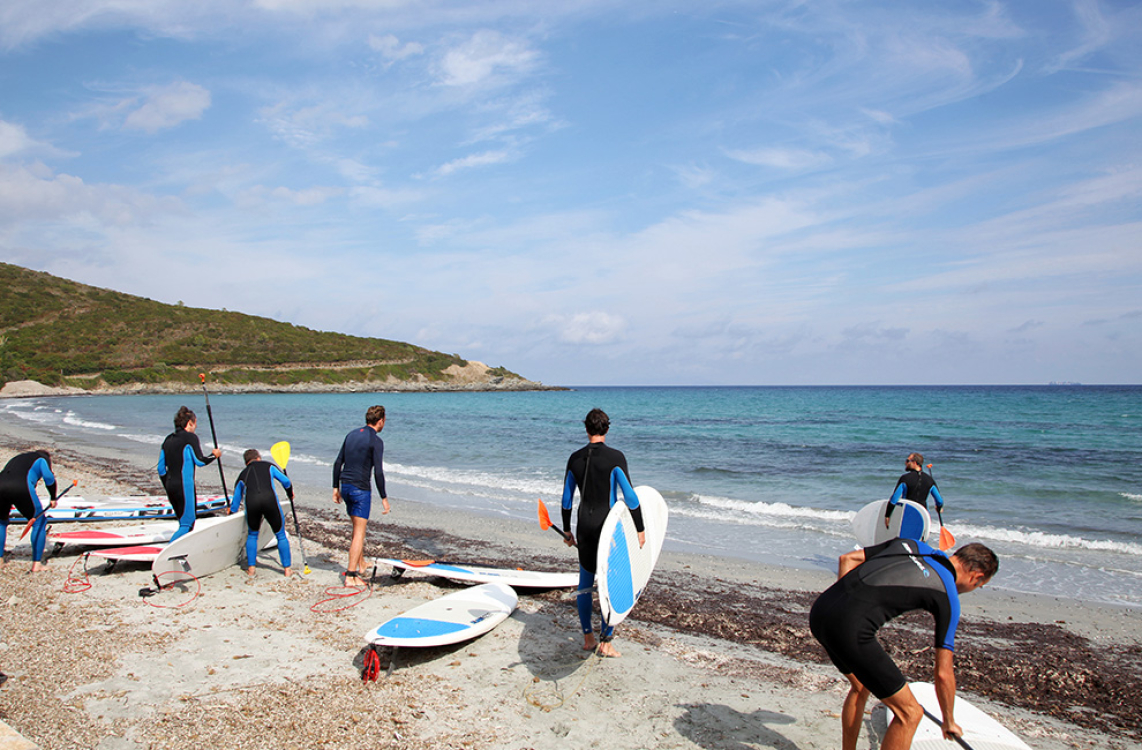 Ontdek de ongerepte zeebodem vanaf je paddleboard ©atc Sylvain Alessandri
Snorkelen: een avontuur voor iedereen
Het natuurreservaat Scandola onthult zijn schatten aan duikers met zwemvliezen, duikbril en snorkel. De rode vulkanische rotsen vormen een contrast met het diepe blauw van de zee. De regelgeving verbiedt er echter het onderwaterjagen, het verzamelen van mariene soorten en elke vorm van het weghalen van fauna of flora.
Het barrièrerif van Saint-Florent is een uitzonderlijke koraalformatie. Het gebied staat sinds mei 1998 onder bescherming van een prefectoraal besluit en verbiedt alle scheepvaart, het voor anker gaan, onderwatervissen en het verzamelen van mariene plantensoorten. Deze strikte bescherming behoudt een mariene habitat met een grote biologische rijkdom.
De stranden van Palombaggia bieden snorkelplekken die toegankelijk zijn voor gezinnen. Tussen de roze granieten rotsblokken herbergen de posidonia-zeegrasvelden sars, girelles, castagnoles en soms nieuwsgierige octopussen. Deze onderwaterweiden vormen een essentiële schakel in het kustecosysteem.
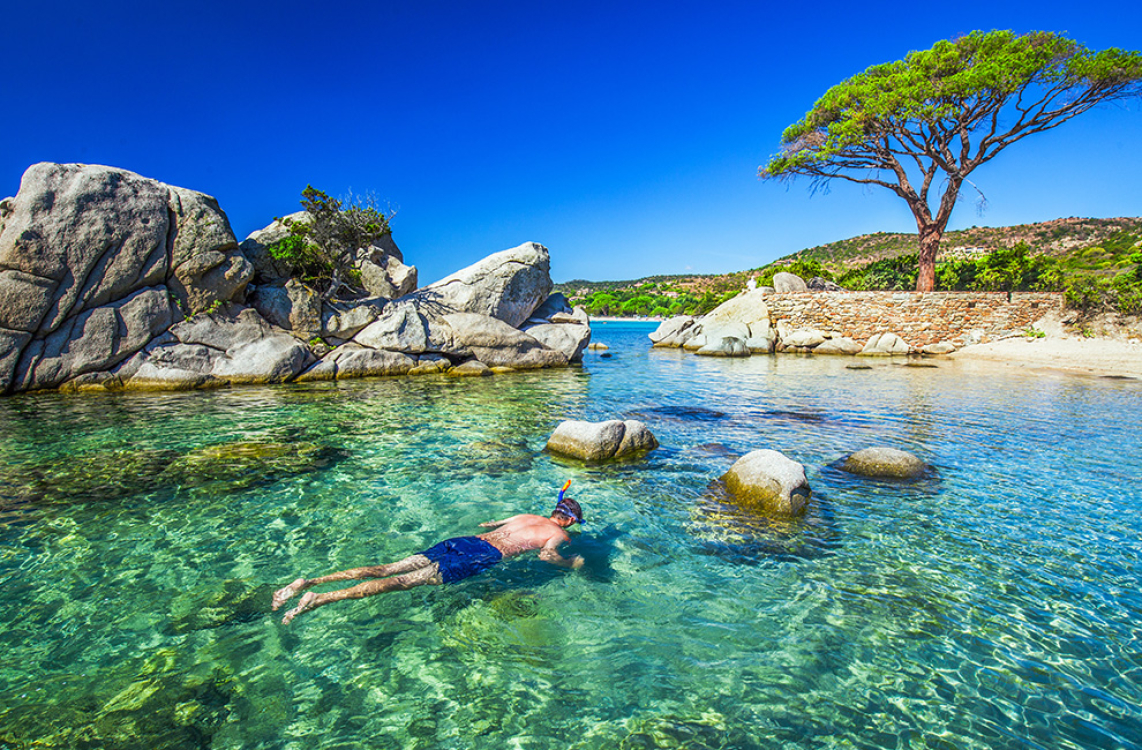 Ontdek het plezier van snorkelen op Corsica ©ADOBESTOCK
Behouden wat we graag verkennen
De posidonia-zeegrasvelden vormen een prioritaire habitat die beschermd moet worden. De Milieuwet verbiedt de vernietiging of aantasting ervan op grond van artikel L411-1¹, met inbegrip van het verwijderen en het veranderen van de omgeving.
Bij een ontmoeting met walvisachtigen is een respectvolle houding geboden. Het ministerieel besluit van 1 juli 2011 verbiedt elke vorm van achtervolging, intimidatie of opzettelijke verstoring. Het Pelagos-reservaat raadt aan om niet dichter dan 100 meter bij deze dieren te komen en beperkt de observatie tot 30 minuten.
¹ https://www.legifrance.gouv.fr/codes/article_lc/LEGIARTI000033035411
Conventionele zonnebrandcrèmes zijn schadelijk voor mariene organismen. Kies bij voorkeur voor minerale varianten zonder chemische filters zoals oxybenzon of octinoxaat om de gezondheid van zowel koralen als vissen te beschermen.
Voor het ankeren van boten moet de voorkeur worden gegeven aan zandbodems. Zeegrasvelden en koraalformaties lijden blijvend onder de mechanische schade van ankers. In sommige aangelegde baaien maken ecologische boeien het mogelijk om aan te meren zonder schade aan de kwetsbare zeebodem.
Duiken in het kristalheldere water biedt een bijzondere ontmoeting met het zeeleven. Kajakken langs de ruige kusten maakt het mogelijk om ontoegankelijke hoekjes te verkennen. Snorkelen in een ongerepte inham is op zijn beurt geschikt voor nieuwsgierige gezinnen. Elk van deze activiteiten creëert een waardevolle band met dit unieke natuurlijke erfgoed dat behouden moet blijven.
Locate