Rechercher...
Corsica's 6 cultural treasures: must-see archaeological sites and museums
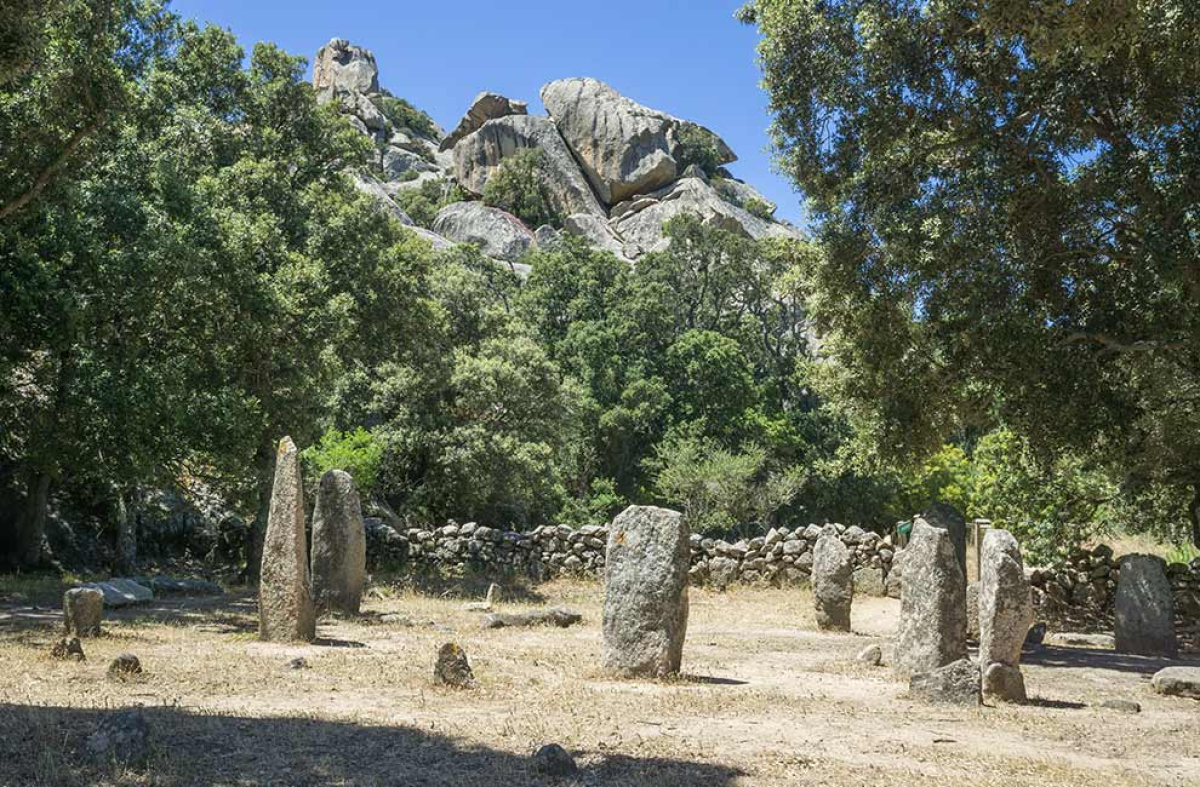 Site archéologique de Cauria
1. The archaeological sites of Pianu de Cauria: Corsican megalithic art
Located 2 km from the sea, the Cauria plateau, in the municipality of Sartè (Sartène) , comprises three megalithic sites: I Stantari, Renaghju and the Funtanaccia dolmen.
I Stantari features an alignment of 30 finely sculpted stantare (menhir statues). These imposing monoliths feature precise details: belts, loincloths, arms and hands.
Research at Renaghju reveals occupation dating back to 5700 BC. The site had 60 menhirs around 4500 BC. This number reached 180 in the 1st millennium BC. The pottery discovered during excavations is among the oldest in Corsica.
Weighing 15 tonnes, the Funtanaccia dolmen dates from the 2nd millennium BC. It consists of a monolithic slab on six orthostats (vertical posts). Imagine yourself standing in front of this impressive monument with over 4000 years of history!
Practical information:
- Duration: 1 hour.
- Equipment: water, walking shoes, hat.
- Free access all year round from Aiacciu (Ajaccio) - 93 km via the T40 or Bunifaziu (Bonifacio) - 61 km via the T40, then the D48.
2. The Alta Rocca Museum: from prehistory to the contemporary era
Located in the centre of Livia (Levie) , this museum presents the history of Alta Rocca, a wild region wedged between the Cuscionu plateaus and the Aiguilles de Bavedda (Bavella).
The tour begins with the Mesolithic period (9,000 to 6,000 BC), where you will discover the fossilised skeleton of the Lady of Bonifacio (7,500 BC). Measuring 1.54 m tall, she is estimated to have been 30-35 years old.
The Neolithic section (6000 to 2000 BC) shows the emergence of agriculture. Admire the pottery, flint, obsidian and metal objects. You will be fascinated by the ingenuity of these prehistoric populations.
The Bronze Age is illustrated by a fragment of the Aravina I menhir statue, representing a warrior chief with his attributes. The Iron Age reveals contacts with Greek, Etruscan and then Roman colonies.
More recent periods are evoked by a 16th-century ivory Christ. Everyday rural objects, such as cattle bells, complete the tour.
| Practical information:
|
3. The Bastia Museum: the Genoese city
The museum in Bastia is housed in the Palace of the Genoese Governors. The permanent exhibition in 19 rooms brings together more than 300 works. The exhibition tells the story of Bastia, which became the capital of the Regno di Corsica in 1637. Its Italian identity is highlighted, with 16th- and 18th-century paintings bequeathed by Cardinal Fesch, Napoleon I's uncle.
The collection of the former mayor of Marseille, Michel Carlini, offers additional insight into Corsican history. It includes objects and souvenirs from the Napoleonic era: fashion accessories, small boxes and letters from the Emperor.
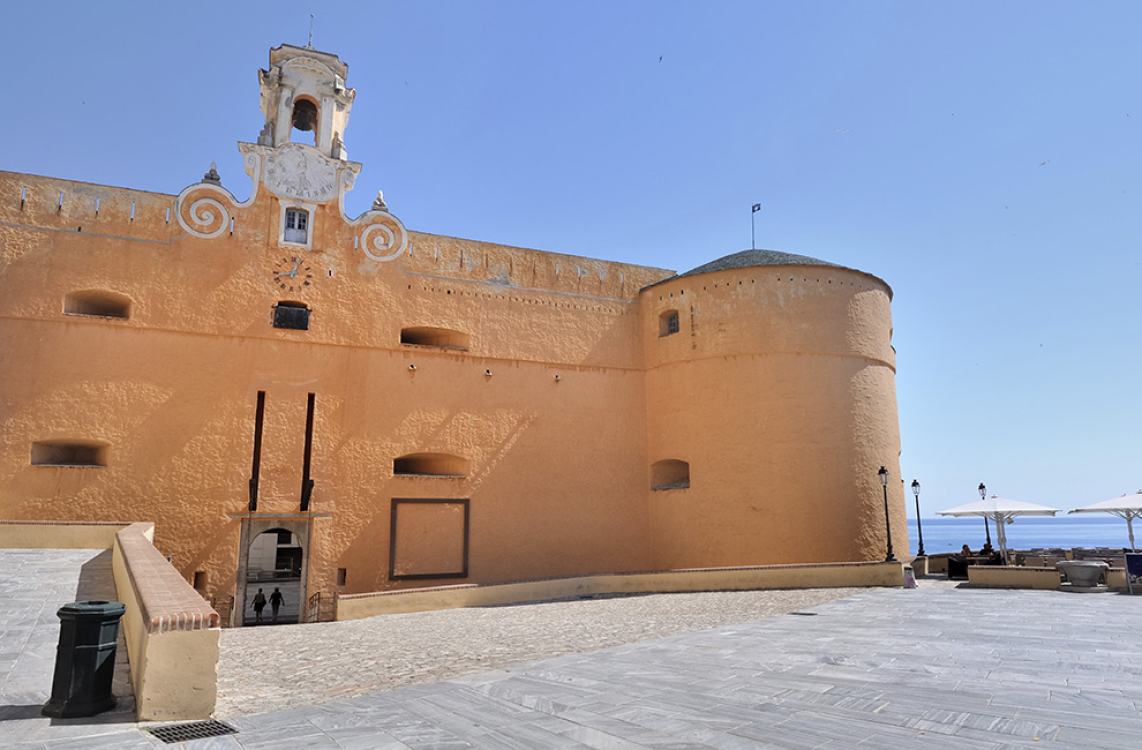 Bastia Museum ©ADOBESTOCK
| Practical information:
|
4. The archaeological site of Aleria: Roman heritage
Aléria (Aleria) is Corsica's main Roman town. It was colonised three times: by Sylla (81 BC), Caesar (46 BC) and Octavian (32 BC). The site covers 11 hectares, bordered by a rampart that is still visible to the south-east. Excavations have uncovered the forum and its adjacent quarters. The western arch and its rectangular building are particularly well preserved.
Recent research (2010-2017) has revealed the original urban layout of this ancient site. Don't forget to visit the nearby archaeology museum, housed in the Matra fort.
Practical information:
- Opening hours: October-May: 9 a.m. to 5 p.m. / May-September: 10 a.m. to 6 p.m.
- Admission: €4 (reduced rate: €3) - combined site/museum ticket.
- Access: from Bastia (RT 20 and 10) - 72 km / from Bunifaziu (Bonifacio) (RT 40 and 10) - 100 km / from Corti (Corte) (RT 50) - 48 km.
5. The archaeological site of Cucuruzzu-Capula: fortresses in the forest
Discovered in 1959 near Livia , the Cucuruzzu-Capula site comprises two major archaeological complexes.
Casteddu de Cucuruzzu is a fortified settlement dating back to the Bronze Age. It is set amid natural granite boulders. At the time, the Torra was probably used to store foodstuffs. It still retains part of its original roof.
A village protected by a wall stretched out below. Take the 3 km trail that leads to Casteddu de Capula. This medieval fortification built by Count Bianco dates back to the 10th century.
Practical information:
- Opening hours: March-May/October: 9.30am-6pm / June-September: 9.30am-7pm.
- Admission: €4 (concessions: €3).
- Duration: 2 hours, 3 km route.
- Access: from Aiacciu (Ajaccio), T40 then D268 / from Portivechju (Porto-Vecchio), D859/T40, then D59.
6. Filitosa: the cradle of Corsican statuary art
Charles-Antoine Cesari discovered Filitosa in 1946. This site is the most important centre of prehistoric statuary art in Corsica.
The alignment of the five menhir statues, known locally as Paladini, features precise details: hemispherical helmets, belts and weapons. According to archaeologist Roger Grosjean, they represent the Shardanes warriors, a seafaring people mentioned in Egyptian texts from the 13th century BC. The site, classified as a historic monument in 1980, joined the hundred historic sites of common interest to Mediterranean countries in 2011.
End your visit at the craft microbrewery, where you can sample local organic beers.
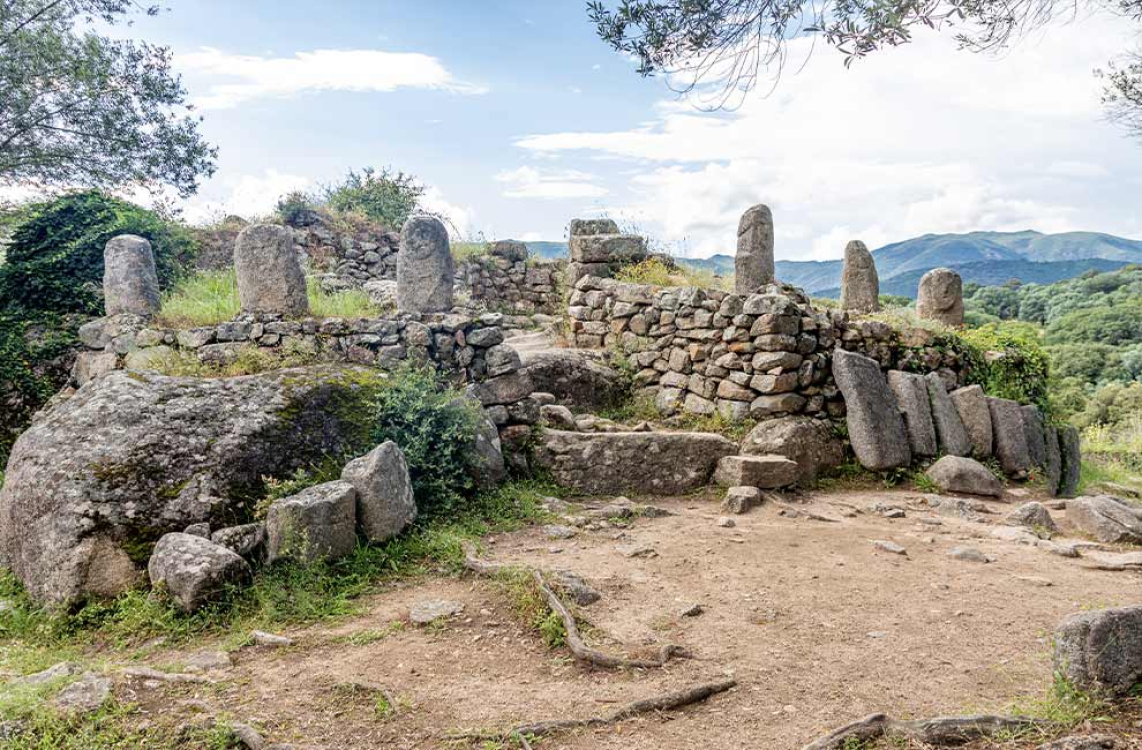 Filitosa historical site ©ADOBE STOCK
Practical information:
- Opening hours: 1 April to 2 November, 9 a.m. to sunset.
- Admission: €9 (concessions: €7, families: €28).
- Duration: 1 hour 30 minutes.
- Located near Sullacarò (Sollacaro), 20 km south of Aiacciu (Ajaccio).
From Bastia to Sartè, these archaeological sites and museums are a must-see cultural discovery for understanding the richness of Corsican heritage. From mysterious menhir statues to collections of Baroque art, they reveal the many facets of a fascinating island history in the heart of the Mediterranean.
Locate