Rechercher...
Easter with the family: a journey to the heart of Corsican traditions
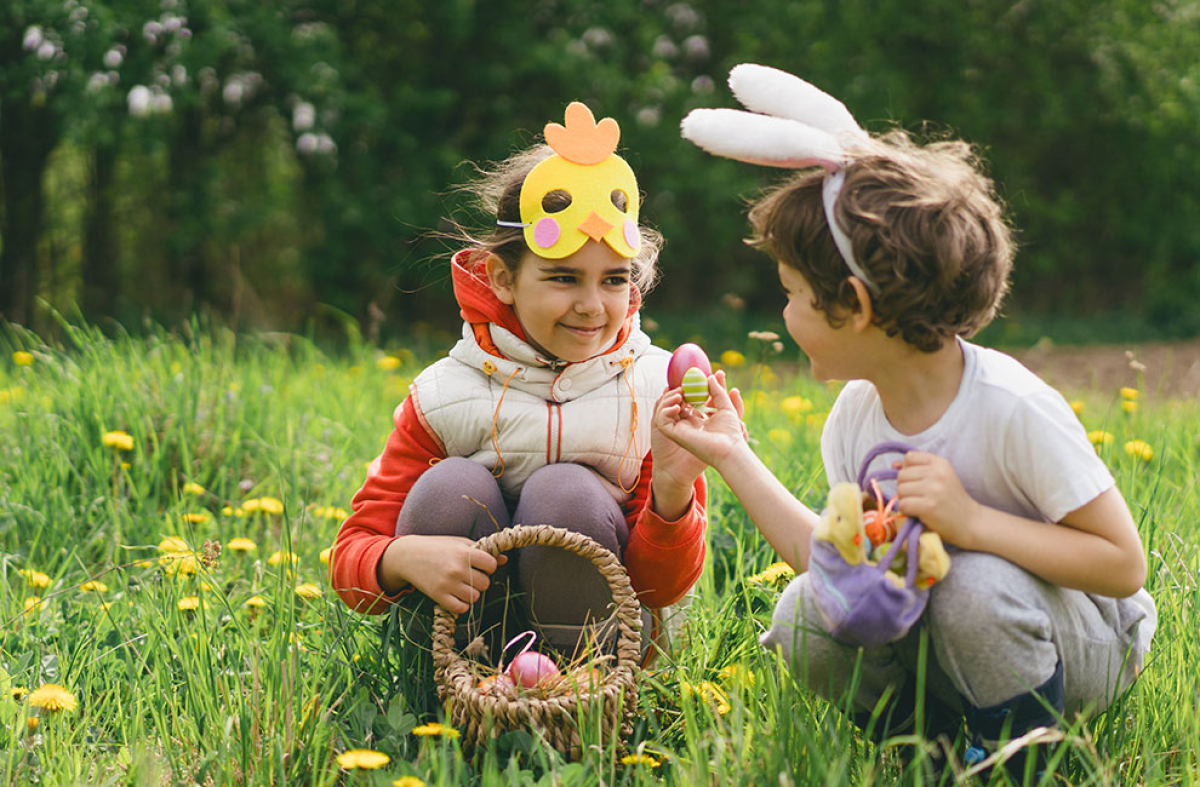 Deux enfants en pleine chasse aux oeufs, célébrant la joie de Pâques en Corse ©adobe stock
Imagine your children marvelling at the processions in Bunifaziu (Bonifacio), savouring a piece of cacavellu or enjoying their first swim of the year in the Mediterranean. From Aiacciu (Ajaccio) to Calvi, from Sartè (Sartène) to Carghjese (Cargèse), the villages come alive for a week of celebrations, where every family can immerse themselves in an authentic culture.
Four unmissable processions
In Corsica, Holy Week is marked by four iconic celebrations .
In Bunifaziu, five brotherhoods parade on Maundy Thursday (‘petites châsses’) and Good Friday (‘grandes châsses’).
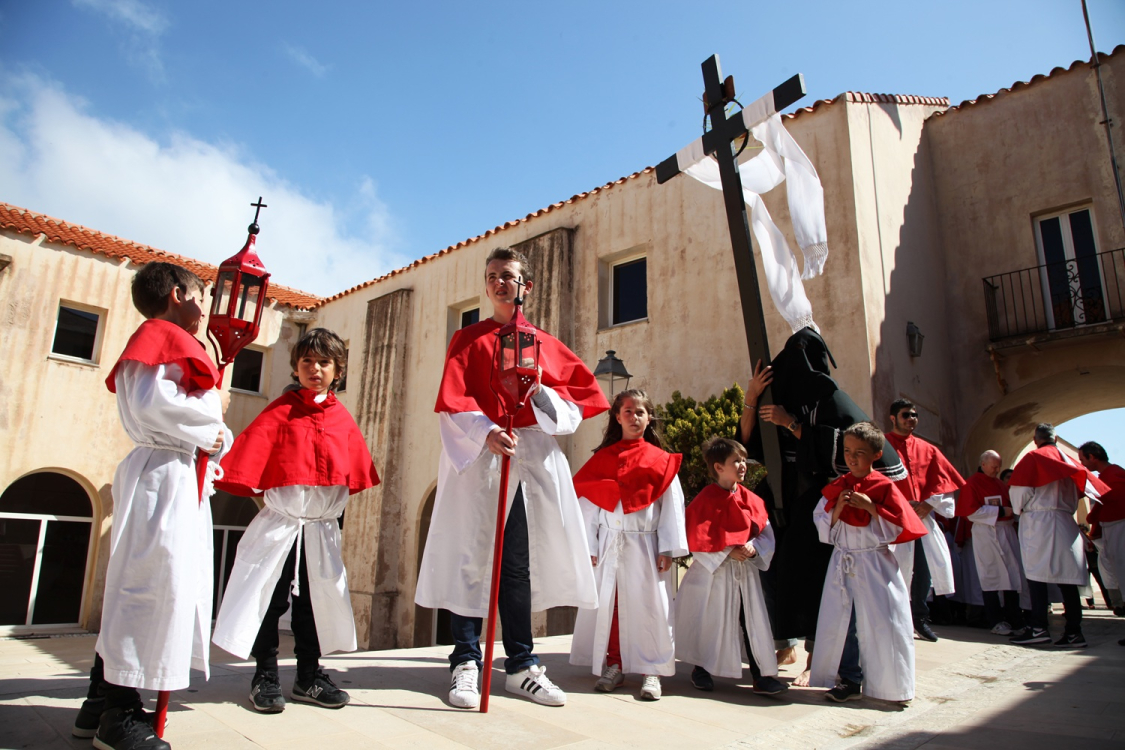 ©ATC S.ALESSANDRI
- Sainte-Croix wears a white alb with a black camail adorned with a red cross with double crossbars. Its role was to welcome and then care for the sick. Instead of celebrating a specific patron saint, the brotherhood pays homage to the Cross on which Christ was crucified. It represents all the saints and martyrs of the Christian faith.
- Saint John the Baptist, wearing a white alb and black cowl as a sign of humility, once represented carpenters and craftsmen.
- Saint Bartholomew, wearing a white alb and red cape, represented masons, stonemasons and other builders.
- Saint Erasmus, wearing a white alb and purple cape, represented fishermen and seafarers.
- Saint Mary Magdalene, wearing a green alb and blue cape, represented farmers, winegrowers and people of the land.
The Baroque shrine of Saint Bartholomew bears witness to his flaying. Weighing 800 kilos, it requires several teams of six bearers. The circular processions begin at eight o'clock on Friday morning. They visit the five churches of the city in succession.
In Calvi , the Granitula sees hooded, barefoot penitents form a spiral through the citadel. This procession of the brotherhoods of Saint Anthony and Saint Erasmus evokes the shape of a snail. It is repeated at different points along the route.
Sartè presents the Catenacciu, where an anonymous penitent carries a cross weighing 37 kilos. His feet are shackled with chains weighing 17 kilos. During his journey to the church, he collapses three times. These falls represent Christ's ascent to Golgotha before his crucifixion.
In Carghjese , the celebrations follow Byzantine rites. On Good Friday, a procession carries the Epitaphios, a shroud representing the last episode of Christ's Passion, the Entombment. On Monday, after the Divine Liturgy, a procession crosses the village. It ends with the blessing of the countryside from a viewpoint overlooking the Gulf of Sagone.
Cacavellu: an essential festive bread
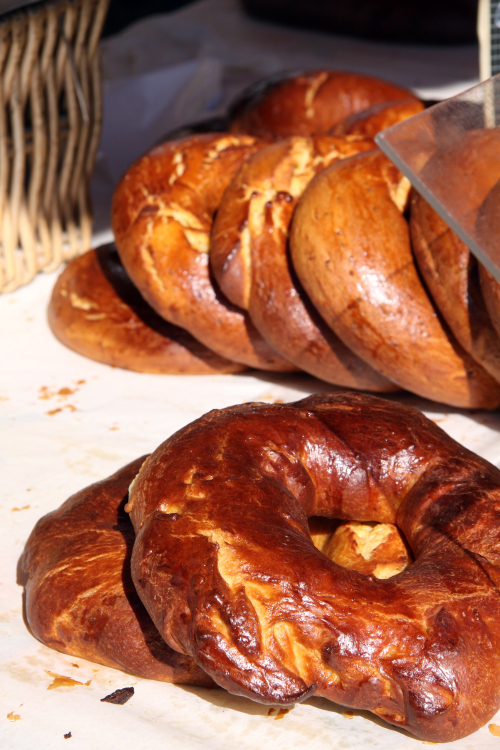 ©ATC S.ALESSANDRI
The cacavellu is an Easter cake in the shape of a crown, flavoured with aniseed or citrus fruits. It takes three days to prepare. Its ring shape symbolises the passage between death and life. Traditionally, families would prepare one cacavellu per child, decorated with a hard-boiled egg.
Corsican bakeries produce around a hundred cacavelli per day before Easter. They bake batch after batch until evening to meet the growing demand during this festive period. Will you be tempted to try one?
A Sunday feast after fasting
Through its traditional dishes, Corsican Easter symbolises the transition from the austerity of Lent to the abundance of Easter. In Santa Lucia di Tallà Sainte-Lucie de Tallano , u trapassu imposed three days of fasting from Thursday to Saturday, with only meat-free dishes.
Maundy Thursday is considered the eve of a funeral. In Calvi, families prepared u cunfortu à a Vergine, a soup made with leeks and beans. In the south, a suppa di a Madonna used the same ingredients. In Campile, fritelle amare contained 13 herbs symbolising the apostles: erba santa (yarrow), u porru (leek), u cuglione di prete (silene).
On Good Friday, fish appears on the table.
On Sunday, the Easter lamb takes pride of place in the centre of the table. Legumes play an important role: chickpeas for a minestra di ceci and broad beans, the first vegetable of spring. Without its skin, it reveals a shape reminiscent of a foetus, the perfect symbol of rebirth. Families in Bonifacio enjoyed panizzi, a kind of chickpea flour porridge cut into slices once cooled, then fried.
La Merendella: Monday family picnic
Easter Monday is Merendella day. In Castagniccia , in the hills above Orezza , shepherds organise large outdoor picnics with fresh goat's cheese fritters and grilled kid. Families bring cacavelli and other local specialities. Meanwhile, the children go in search of chocolate eggs hidden in the countryside.
In the 1980s, the Adecec (a cultural association whose aim is to promote and defend the Corsican language and culture) turned this Monday into a popular gathering. Today, this custom is a must for Corsican families.
The first bath of the year
On Easter Monday, Corsican children take their first swim of the year. Despite the water temperature being only 15°C in April in Aiacciu and throughout Corsica, this aquatic baptism symbolically marks the end of winter and the beginning of sunny days.
Advice for families
For the processions, arrive early in Sartè or Bunifaziu. Try different versions of cacavellu, and don't forget to prepare a varied picnic for the Merendella. Bring your swimsuits and towels for the first spring dip
Calendar of celebrations
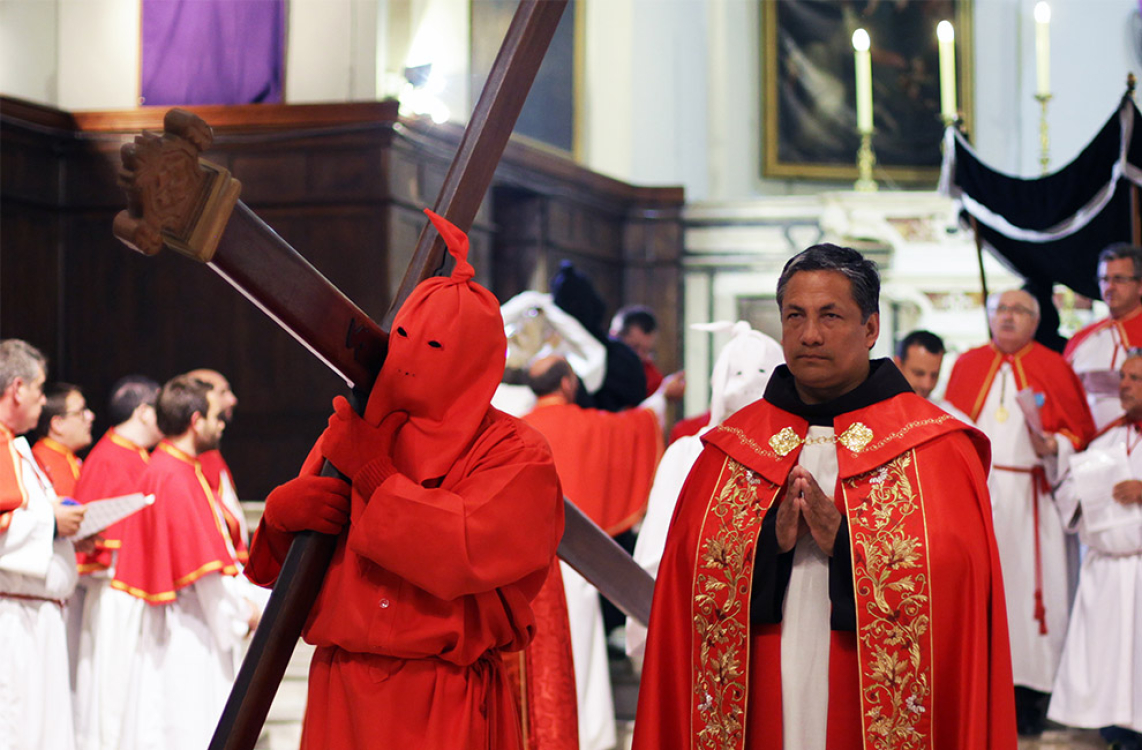 ©ATC S.ALESSANDRI
Holy Week follows a precise calendar. Each day has its own special symbolism, setting the pace for life on the island. Palm Sunday (a dumenica di l’alivu): making of crucette, small crosses made from blessed fresh palm leaves to protect homes.
Holy Thursday (u Ghjovi santu): start of the processions. At the church of Sainte-Marie-Majeure in Bunifaziu, the tradition of mazzuchi sees the congregation strike the ground with palm branches.
Good Friday: in Bunifaziu, circular processions begin at 8am. In Cap Corse, the Cerca covers 12 km around Erbalunga and Brando . It is led by the Mazzeri (sorcerers), followed by children and women dressed in faldetta (mourning clothes). In Calvi, a Granitula takes place in the evening.
Saturday: day of mourning. In Carghjese, new fire ceremony at the Latin church.
Easter Sunday: celebration with a large family meal of Easter lamb, cacavellu.
Easter Monday: Merendella and first swim for the children.
Corsican Easter traditions are a living heritage. Bonifacio polyphony, distinct from other Corsican songs, accompanies the ceremonies with a special Kyrie melody. Impressive processions, unique flavours and moments of family sharing offer visitors an immersion in the island's culture.
Locate